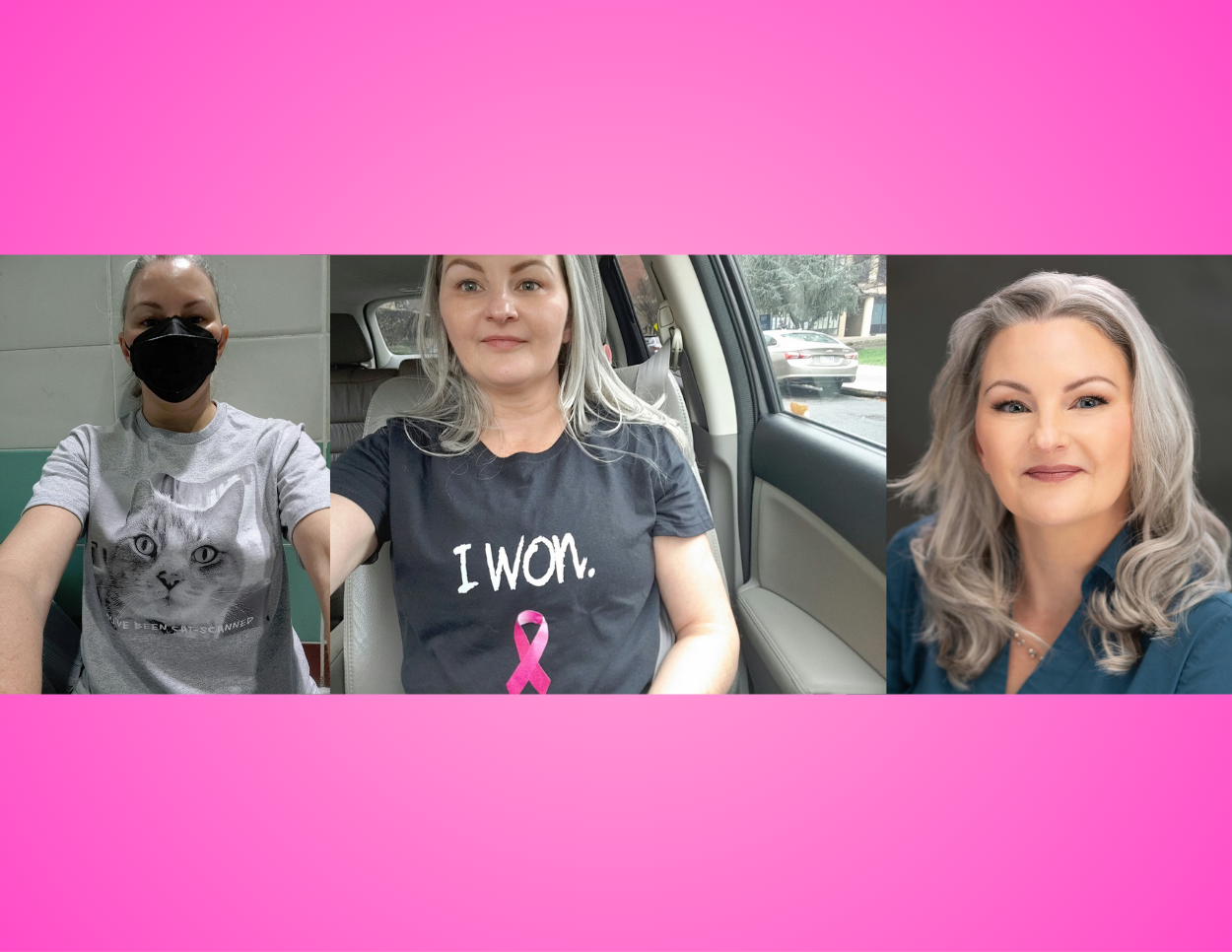
Share This Post


By Dawn Campbell
My cancer was found almost in real time. I’ve been getting yearly mammograms since I was 27, starting at my six-week postpartum checkup after my first child was born. I wasn’t having much luck breastfeeding, so my OB-GYN did a breast exam and immediately sent me to the Breast Care Center at the hospital.
I was diagnosed with fibrocystic breasts; dense tissue that some studies link to a higher risk of breast cancer. It was scary, but honestly, I didn’t think about it much. I was too busy raising an infant, working full-time, and going to grad school.
Every year I went in for my mammogram, and every year I was relieved when it came back clear. Until it wasn’t. In June 2022, my mammogram was clear, but since my breasts are dense, they always follow up with an ultrasound. This time the ultrasound showed something the mammogram didn’t. They wanted another biopsy. No big deal, I’ve been through this before. It came back as atypical ductal hyperplasia, something pre-cancerous. Kinda scary, but no big deal. Let’s cut it out. An MRI shows no cancer. Two weeks later I have a lumpectomy and I’m back at work the next day. No biggie.
Then I get a call: pathology shows it’s cancer. I need another lumpectomy to get clear margins, plus some lymph nodes removed to check whether it’s spread. Okay, let’s do this.
A month after the first surgery, I have the second. Everything looks good, and I’m back at work the next day. Then the doctor wants 20 days of radiation, for good measure. I work full-time, so that means a 20–30-minute drive for a 40-second treatment, then 20-30 minutes back to work, praying I find parking.
Believe it or not, finding a parking spot was the single biggest hurdle of my entire cancer treatment. I must take leave in 15-minute increments, and every minute I spend circling the lot like it’s Christmas at the mall eats into my dwindling leave balance. The cancer treatment schedule really isn’t built for working adults.
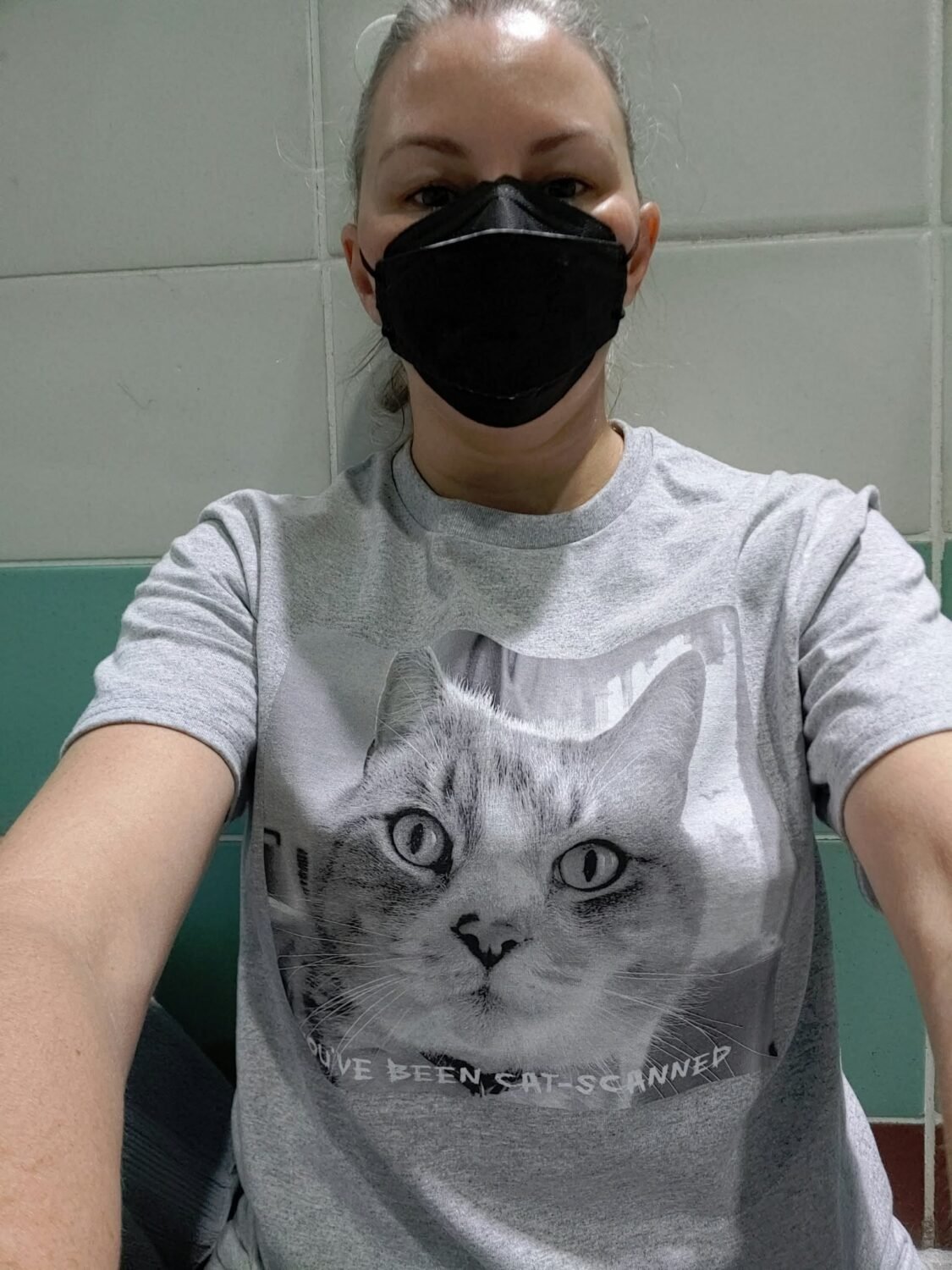
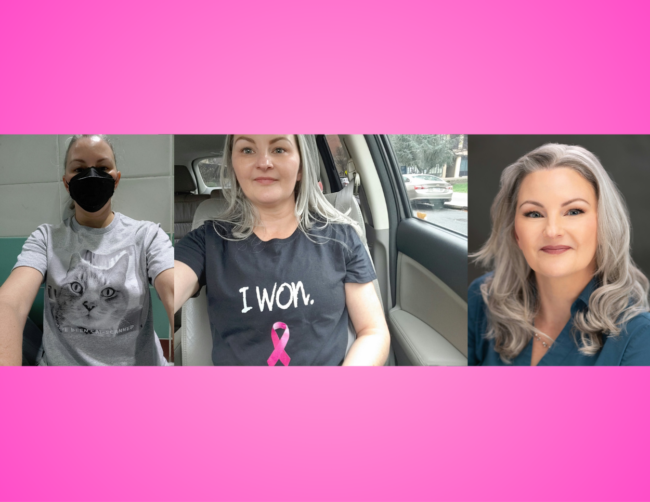
I’m forever grateful to Keith the Cat’s mom, who donated her reserved parking spot to me for the whole month of radiation. She lifted a huge weight off my shoulders. While I was going through all this, my daughter was a senior in high school, and my son was in second grade. My husband’s schedule didn’t allow him to attend any of my appointments, so I did it all myself. To the outside world, even to my own family, I didn’t have cancer. No one saw what I was going through, because I treated it like just another inconvenience of life. I was grateful my cancer was caught early and told myself I could get through this without it touching the rest of my life.
If I’m honest, some of that gratitude had an edge to it. I caught it early. I didn’t lose my hair. I didn’t spend weeks in a hospital bed. So, some part of me decided I hadn’t earned the right to call myself a cancer survivor, like my version didn’t count, like real suffering was the price of admission and I hadn’t paid enough of it. I didn’t say this out loud to anyone. I just quietly believed it, and it’s part of why I kept pretending I was fine.
Except it does affect my life, just in ways that aren’t visible. For the longest time, I tried to pretend it wasn’t affecting me. I pushed on with work, teaching after-school Zumba to elementary kids, volunteering and fostering for animal rescues. I don’t think I ever took a moment to process what had happened to me; what was still happening. My type of breast cancer usually requires at least five years of treatment after surgery, and for me, the side effects of that treatment were worse than the surgery itself. Hormone blockers and daily chemotherapy put me into menopause overnight. I was exhausted. My joints swelled and ached. Hot flashes and night sweats made me want to rip off my clothes and lie on blocks of ice. My brain fog got so bad I missed parent-teacher conferences and started worrying I had early-onset Alzheimer’s. I honestly wanted to die. I never planned to kill myself, but I didn’t want to exist on this planet anymore. And through all of it, I kept pretending this wasn’t happening; going to work, acting “normal” even at home.
After three months of this, my oncologist changed my chemotherapy and gave me medication for the hot flashes, and suddenly I had a new life. I was still tired, my joints still swollen and painful, but it was manageable. For three and a half years, I slogged through life exhausted and in pain, focused on my family and my career, relieved every six months when a scan or test came back clear.
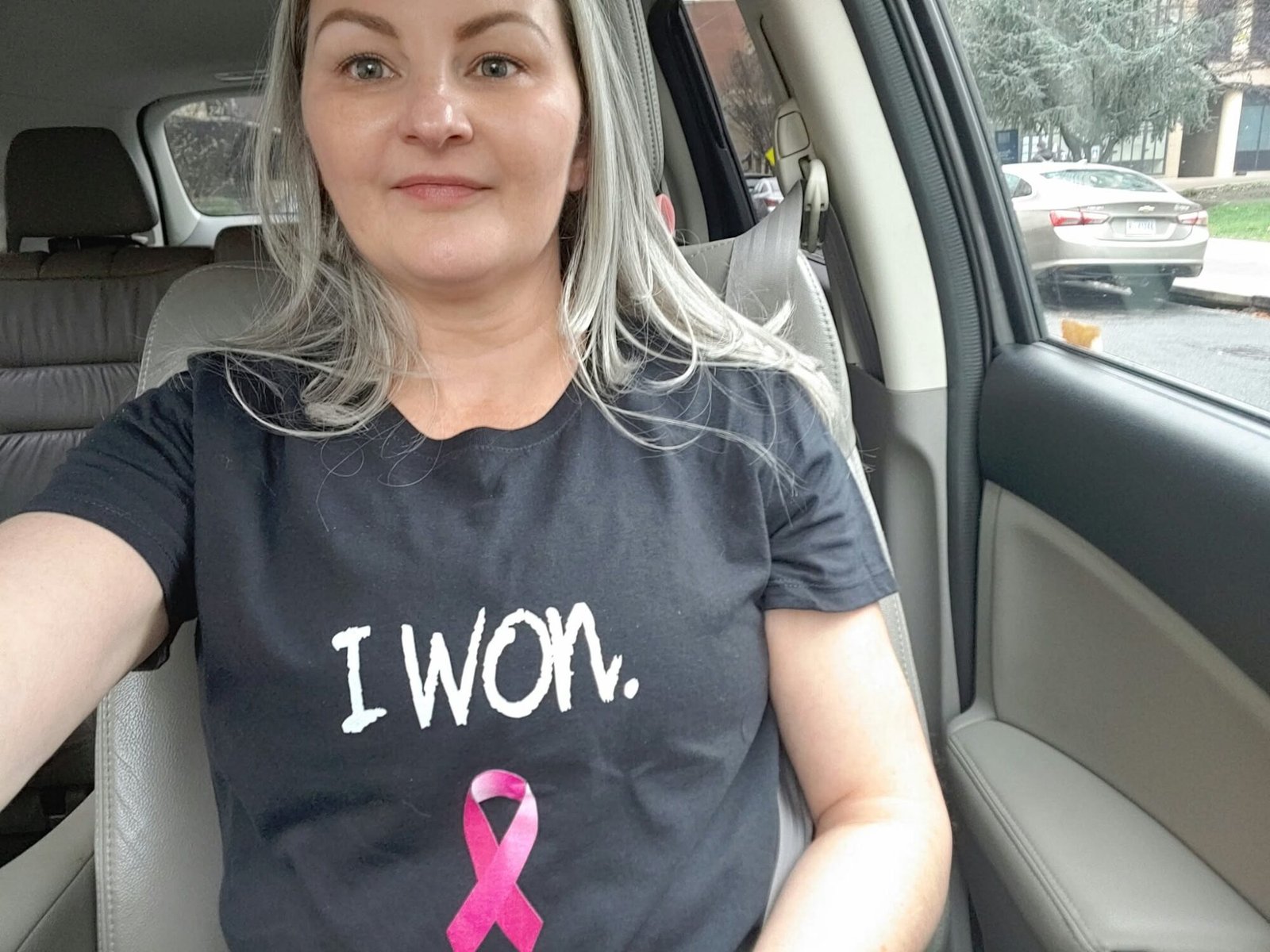
I started sharing my cancer journey with friends and colleagues, with one message: early detection saves lives. Go get your preventative screenings. After three and a half years, I just couldn’t take the pain and exhaustion anymore. I talked to my oncologist about my options, and we decided to stop the daily chemotherapy and try immunotherapy instead. It comes with its own side effects, but the joint pain finally let up. It’s a monthly injection, and so far, it’s not so bad.
I feel like there should be a moral to this story, but the truth is simpler than a moral: performing “fine” cost me more than the cancer did. I went to work the next day after every surgery. I taught Zumba, fostered animals, sat through parent-teacher conferences I could barely remember attending all while quietly falling apart, because no one could see what I was carrying, and I never told them. That silence nearly cost me everything.
So, if you take one thing from this, let it be that you don’t have to earn your cancer by carrying it well. Ask for help before you’re drowning. Say the hard thing out loud. You are not alone. And neither am I.
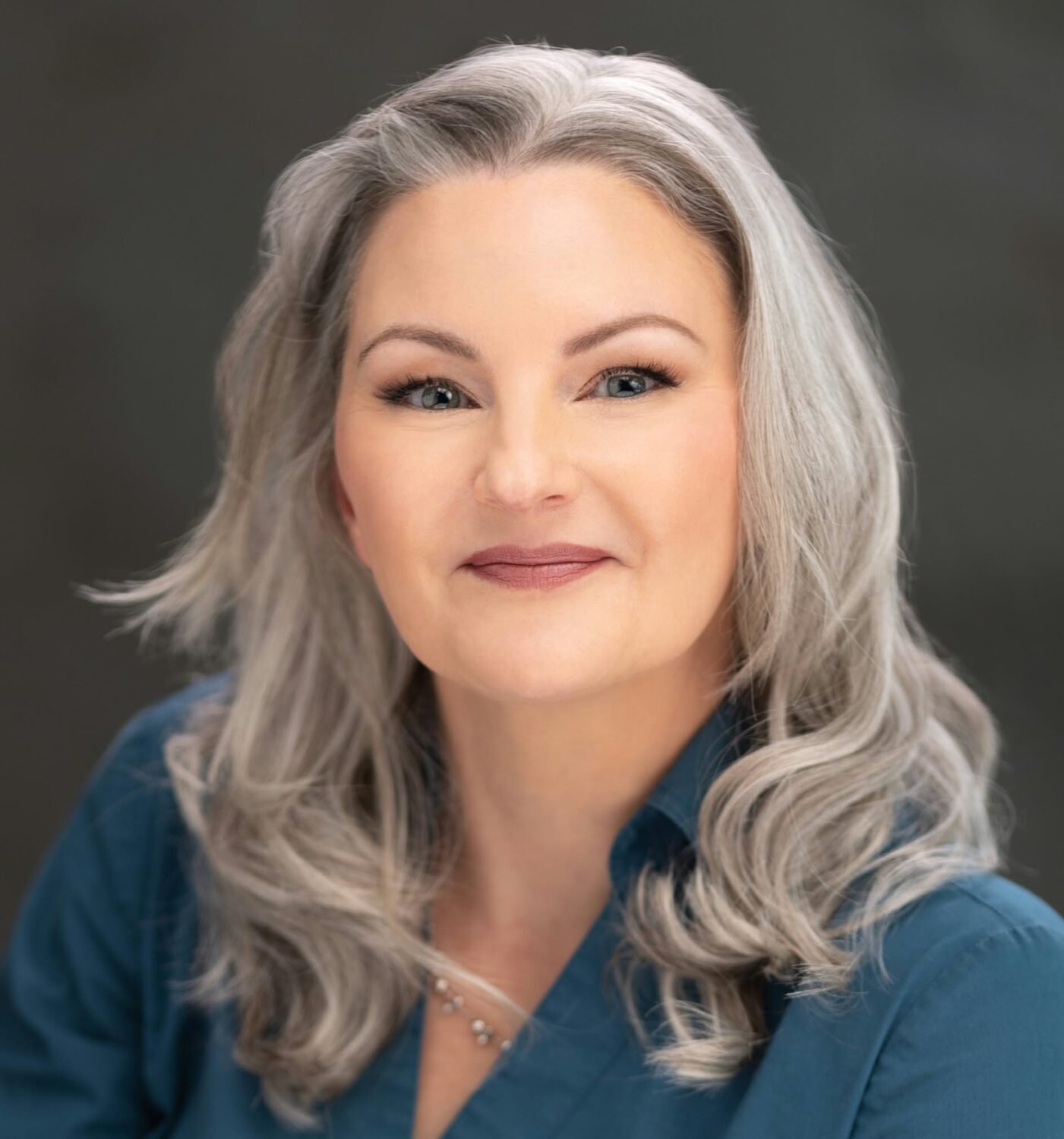
Dawn Campbell
Dawn Campbell has been working in the Intelligence Community for 25 years. She has an undergraduate degree from Michigan State University and a masters in strategic intelligence from the National Intelligence University in Washington DC. She is a mother, wife, manager, analyst, and friend. Her passion is home improvement projects and saving all stray animals! She is a cancer survivor and Keith the Cat salutes her!